Wednesday, March 01, 2006

The American Community in Argentina

This last February weekend, the New York Magazine guide published a through article written by Ian Mount entitled “A moveable Fiesta”. See what they are saying about Buenso Aires & The American Community in Argentina ........


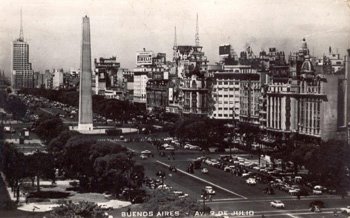
A bright blue sky strikes the city of Buenos Aires, is full summer and the average 70 F temperatures warms up the beautiful metropolis. Its 19th century white buildings lighten up with the shine of a clear sky; the parks filled with blossoming trees are prettier than ever, the South American Paris is glooming. Those who are not off on holidays, enjoy the charm of the riverside cosmopolitan town. Many visitors from around the globe walk around the city center discovering BA mysteries and beauties. The only thing setting aside the tourists from the locals is the comfy ware, for this is a melting pot society in which every one fits in, as long as he or she is sophisticated, trendy and knows how to enjoy life.

Those unique local cultural features together with a truly favorable and growing economy have become a huge magnet for people around the globe looking for a better life, higher living standards and the peace of mind of being on a permanent vacation feel.

This last February weekend, the New York Magazine guide published a through article written by Ian Mount entitled “A moveable Fiesta”. It’s a wonderful and interesting piece on American expat’s who chose Buenos Aires as their new loving home. But what catch my attention the most was a smaller subtitle, one could read on the upper left margin “Change your life”.
The author was talking to all those young businessmen who work long hours, live in well located but small apartments, they are truly successful in many fields but this does not reflect on their living standards. This concept really catches my eye, so I kept on reading.
I’m familiar with the fact that Buenos Aires has become a fantastically appealing location for people from around the globe who seek better living standards and to take out the most out of their hard earned money. I’ve even wrote several pieces on this, advising people from all over about the great options the Buenos Aires real estate market was offering –even before this was broadly published in all sorts of international magazines- I saw the line, and thought that nothing would be best than sharing the tip.

The fact that awesome properties in the best neighborhoods of Buenos Aires can be afforded for ½ the money you would be paying in New York, San Francisco, California, Paris, Rome or London is something to keep an eye on. And though Buenos Aires is not the only city around the world in this situation, it is one of the very few –I might risk, the only one- that while in Latin America and a developing country, has very similar cultural patterns to western developed capitals. The food, the aesthetic, the culture, the society is so cosmopolitan that everyone from anywhere fits perfectly.

But it’s not just about fitting, its about getting what you want out of life. And that was clearly stated by Mount in his New York Guide piece. A former senior vice-president of bond sales with the Belgian banking conglomerate KBC, changes his one room apartment in NYC for a wonderful floor with terrace and swimming pool in the heart of BA. He also mentions the luck of a young Doctor and a gorgeous young woman, just to name some of those young and life thirsting people choosing to take control of their lives, present and future.

We all thought that relocating around the globe was something retired old people did. Well, they actually do, but there’s no need to spend a life of mediocre appreciation of life to enjoy it during your last days. A couple of savings, a true appreciation of what’s good and makes you happy and a lot of courage take you really far, specially in this world in which breathtaking gorgeous places such as Buenos Aires offer such a broad range of options to delight and enjoy yourself.


So if you are interested in tasting some of the fun, come on down, you can stay at Di's, and whatever your needs are they can be fitted thanks to the superb personalized service oh hers. Interested in staying here at Di's Bobo Lodge? Please contact me, Bob Frassinetti for more information and reservation information. And if you are looking to buy art, antiques or collectibles from Buenos Aires, Argentina, then check this my web cam for all kinds of items, I can show you my office and any item LIVE, and for more information: Contact me See "artdealer_ar" profile on Yahoo, I'm online now!: You can chat with me using Yahoo Instant Messenger. Or email me: Bob Frassinetti.

Tuesday, February 28, 2006

Auction Tours for Art & Antiques in Buenos Aires, Argentina

Auction Tours for Art & Antiques in Buenos Aires, Argentina
Topic: Auction Tour for Antiques


Auctions in Buenos Aires are a great option for collectors, antique dealers and gallery owners from around the globe.

The fact that Latin American art is growing worldwide in terms of prestige and acceptance is clear to us all. During the late 90s it was Christie’s auction house the pioneer who saw the market evolution line in the world of Latin American Art, antiques and collectibles. Back then the major and oldest auction house in the world and Argentina’s finest and most traditional auction house Naon, joined ventures to work in the local market. Since then, several auctioneers from around the globe began to work in the country. Sotheby’s owns an auction house in Buenos Aires, working very well. Local auctioneers such as Arroyo Gallery, Roldan, Bullrich, Banco Ciudad auctions, Sarachaga –just to mention some- are working strongly in the local and international scene.


Link to Photo Album Another Gallery Night 2005

The fact that Argentine and Latin American artists are highly appreciated world wide together with the fact that Argentina beholds a rich collection of consecrated European and American artists, makes of this place a really appealing market for art lovers and dealers from all over the planet.
Since Christie’s first auctions of Latin American for 2.5 million dollars in the early 1980s to the record sales in 1994 with 28 million dollars in auctions, the Latin Art is growing.

In November 1996, Antonio Berni, Argentine painter of great name opened the world market for native artists, when he sold his “The immigrants” painting for over half a million dollars.

This week, Sotheby’s monthly bulletin reads: “Sotheby's year-end total for Latin American Art reached a record $28,263,000 - the highest amount of any auction house in the history of the field. Buoyed by the excellent quality of the works on offer, along with realistic estimates and an ever-widening group of buyers, the market for Latin American Art clearly increased its strength in 2005. From Colonial to Contemporary Art, from South to North America, this year's total set records that point to deep international interest across the wide range of movements and artists that comprise the overall Latin American Art market”.

To buyers around the globe, Latin American auction houses are appearing more appealing by the minute, not only for the broader of the options, but also for the favorable exchange rates with European and American currencies.

All in all, buying art and antiques in South America and Argentina in particular isn’t free of rules and paperwork to handle. There are specific regulations to follow, licenses are required and know how involved in acquiring and exporting art.

Art dealer has a specialized team that handles everything in terms of art, collectibles and antiques auctions, and shopping, hunting and customized touring services. The planning begins before you arrive to the city, with conversations, directions and market research of the style, art and antiques you’re looking for. From the minute you arrive to Buenos Aires we handle everything from picking you up in the airport, hotel reservations, auctions scheduling, hunts to off the path markets and fairs, discounts, shipping and handling all the paper work regarding the exporting of the works.
This is a great opportunity to work with and take advantage, but the best way to take the most out of it is by planning and working in advance.

So if you are looking to buy art, antiques or collectibles from Buenos Aires, Argentina, then check this my web cam for all kinds of items, I can show you my office and any item LIVE, and for more information: Contact me See "artdealer_ar" profile on Yahoo, I'm online now!:You can chat with me using Yahoo Instant Messenger.


Link to Photo Album Religious Painting of South America & Argentina
Email : Email Bob Frassinetti.

Monday, February 27, 2006

Highway 40 Venture Tour and Good Wines


Wines & Highway 40 in the high mountains of North West Argentina.
Topic: Route 40 Tour
Highway 40 Tour & the Finca Colome: luxury, great wines and fabulous art


Around the world, the Argentine wines are being recognized, tried and enjoyed more by the minute. This "new" discovery for the wine lovers around the globe dates in our country of over two centuries; but it wasn't till recent years that Argentina's wines began to play a central role in the Wine world of abroad. Mainly known by its outstanding Mendoza vineyards and wineries, its fine Malbec, the world of Argentine wine is far broader than the Cuyo Region. Towards the northern frontier, as the green valleys began to turn red and sandy, the humidity turns into a dryer and hotter weather, there's another winemaking region of outstanding quality that hasn't yet
been truly appreciated to it's highest extend by wine lovers from around the globe. The province of Salta, and more specifically the area around the town Cafayate, is the heart of this new unexplored fabulous wine.

High Altitude Grapes & Vine Yards only found in Argentina.

Pioneers in the area were southern Spanish and Italian descendants who brought to our nation their winemaking techniques and found a very similar weather-geography-geology in this region. The area wines are stronger, featuring fuller bodies, mainly due to the climate and soil. Something not every winemaker is capable of appreciating and promoting to a sophisticated extent. Those with the sharp eye, the adventurous heart and the sensible palate to create superlative wines out of those grapes have the key to a wonderful world of senses, emotions and an unexplored market.

Donald Hess, of the Hess Collection, the Swiss magnate, owner of some of the world's finest vineyards -among many other successful projects- has recently discovered the majesty of the Calchaqui Valleys' wines, geography and special sweetness in the air. He decided this was the place for his next venture. It will soon become not only a venture but a life meaning path.

But Hess does nothing less than spectacular, none of his projects or visions is the sure thing, the trail everybody is going thru. So he picked upon the growing interest in Argentine wines, and developed a boutique top notch quality concept, miles away from the ever-growing Mendoza. Hess went directly for a Calchaqui Valley vineyard. But, yet again not just any vineyard. Colome is the oldest and highest vineyard in Argentina, and one of the highest placed ones in the whole world…………. Some 20 kilometres from Highway 40.


Highway 40 in the high mountains of North west Argentina.

Press here for photo gallery of the last Highway 40 Tour: Highway 40 from San Juan all the way up North West Argentina.

…….156 km north from the delighting and gorgeous town of Cachi, and 4 hours away from Salta capital city of the prvince of the same name, is Finca Colome, the oldest vineyard of our country. Following the shadow of Highway 40, traced by provincial route 53 leaving the small town of Molinos and heading 20 km more into the heart of the northern Puna is Colome.

Colome was back in the 19th century grapevines farm, featuring a main house-ranch, surrounding cultivating lands and a couple of houses for the workers. According to specialists the old Colome winery was founded in 1831, by the last Spanish governor of Salta, Nicolas Severo de Isasmendi y Echalar. In 1854, his daughter Ascension, married Jose Benjamin Davalos, and introduced pre-phylloxera Malbec and Cabernet Sauvignon vines to Colome that were specially brought from France. Three vineyards dating from this time still produce grapes and stupendous wines thanks to the sharp eye and palate of Hess' sommelier. The winery and vineyards remained in the Davalos family until 2001, when Raul Davalos sells the Finca to Donald Hess.

The 96,371 acres at 2,300 meters over the sea level, facing the stupendous Cachi snowed peaks are the perfect complement to the superlative colonial central house. Designed and decorated in tune with the local Andes geography, highlighting the earthy colours. Each of the nine rooms is spectacular and extremely pleasant to be in. Visitants are pampered and every detail is taken care of wonderfully. From a superlative gaucho bar, a meditation area, fireplace living room areas, putting green and an outstanding pool, the Finca was successfully transformed from an old colonial building to a gorgeous boutique hotel that will soon feature its own Art Gallery hosing Hess' private collection of American and international artists.


If you would like to take part in any of our future venture tours or in this interesting rally venture, thru and along Highway 40, please don’t hesitate to contact us directly thru email, phone or chat. Press here: Contact me See "artdealer_ar" profile on Yahoo, I'm online now!:You can chat with me using Yahoo Instant Messenger.


Link to Photo Album Route 40,Argentina


Link to Photo Album Ruta 40, Route 40

Email : Email Bob Frassinetti.

Saturday, February 25, 2006

Travel Rally venture, background. Along Route 40 Argentina

Travel Rally venture, background. Along Route 40 January-February 2006


For as long as I can remember, route 40 was in my travel plans. Each time I took some time off I was lured by route 40 adventures, when I was discovering other faraway lands, it was still on my mind and dreams; it was my top tip for fellow travelers seeking adventure and beauty in Argentina.


As time went by, highway-route 40 was not only a desired destination, but a life’s need, a light that illuminated my present and upcoming dreams. From then on, I knew this was sort of a fait destiny, one of those places that will make your existence big and amazing.


I visited and traveled along the 40 by myself and those I love, year after year. But recently something changed. Since I had created a job I loved, a project I’m deeply fond of that’s developing fabulously by the hour, I thought to myself: why not include this fascinating route? And I did. I began to design a Route 40 Rally Adventure-venture, and finally by the end of 2005 a whole projection was soon to become reality.


In the past I had explored the southern extreme of the route, and found it amazing; I thought that a test adventure ride along the northern part was just what I needed to finally trace the total tour lines. And soon all the pieces began to fit into the master puzzle. My beloved partner was also tempted by the adventure, so we hit the road in mid January for a wonderful adventure… We decided we were going to stay in traditional and magical hotels, those that are truthfully local with an extra charm. I christened them Cheap Hotels, inexpensive but wonderful small inns with the true local feel and way of life, artistic and simple (the key to amazing)…

Buenos Aires- San Juan was our first section, whilst not thru the route 40, for it doesn’t reach the Atlantic coast region; we were on our way towards the Northern section of our Route 40 Adventure.

January 15, we hit the road. After adjusting last minute issues regarding work and house care we finished loading the car and hit Santa Fe Avenue towards the main highway taking us out of Buenos Aires. Filled with happiness and emotion, we were on our way already!


We knew that this first trip was the longest, so we bought some sodas, candies and a super box of sandwiches for the road. Those are not just any regular sandwich; these are special Argentine ones, made out of a very thin bread loaf, ham, cheese and any extra ingredient of your desire, olives, lettuce, tomato, peppers, salami, palm hearts, tuna… you name it, they have it.


Heading out of Buenos Aires we took the Route 8 and went thru the provinces of Santa Fe and Cordoba towards San Luis. We traveled over 800 km until Merlo, a sweet small town known for its wonderful mellow climate, fabulous landscapes and great sights.


Our initial plans to stay overnight in Merlo were frustrated by the fact that the town was packed. We thought we will visit this sweet town some other time, this trip was all about the route 40… We were filled with positive energy, our wonderful trip was starting, hence we understood this as a “meant to be sign”. We hit the road immediately towards the magical San Juan thru route 20 –home to the Moon Valley and many wonderful natural sights-.


We arrived late in the evening to a small inn at Quines. It was late at night but the night attendant arranged us a sweet room and a pleasant dinner.

Enjoying the stars and the sweet air while eating dinner we met our first road friends two bright Danishes –mother and son- who were traveling thru Argentina on a super motorbike.


A wonderful conversation kept us busy that night. We then rested… The next morning, under a bright blue sky we headed towards far more northern destinations. We arrived at noon to San Jose de Jachal. A charming small town lost in time, just a few couple of blocks and adobe brick antique houses standing by the marvelous landscape welcomed us quiet and empty: it’s siesta time and every soul takes time to rest under the shade of trees or the comfort of their beds. Latter in the afternoon, when the raving sun begins to hide behind the mountains the village dwellers slowly begin to populate the streets once again.


We stayed at another interesting lodge; the cute San Martin Hotel was our home for that night.


As the sun goes down and the stars begin to shine brightly in the clear sky we head to a local pub for a cold beer and peanuts –the Argentine equivalent to the Irish popcorn-. It was time for dinner a true northern “asado” was waiting for us; it was good! We invited an American couple to join us for dinner. Our new friends were also traveling to Talampaya in the morning so we shared information, tips and life stories.

Early the next morning we head to the wonderful Talampaya in La Rioja. This fabulous breathtaking location has been declared humanity’s patrimony by the UNESCO… and they are right! It’s wonderful.
The road throughout the mountains until Villa Union is gorgeous. Shallow rivers, rock tunnels and very little vegetation combine creating a spectacular scene.


We arrive to Pircas Negras Hotel, were we just take a minute to organize our stuff and head towards the wonderful National Park of Talampaya.
Oh my God, this is a breathtaking place! Immense red stone walls that have been carefully crafted by the millenary wind stand upon us as superb Natural Monuments. We go inside the park with the company of a specialized tour guide and a couple of fellow travelers from around the globe that go as speechless as we do.
The scenery is breathtaking; we’re touched in our souls by this wonderful place.

At night, another fabulous experience would round up a fantastic day… dinner at Los Sauces delights our palate with a simple but delightful “cabrito asado”.

The next stop in our adventure is Tucuman. We drive in 10 hours through 3 provinces. The leftover water mirrors left by the day’s before rain reflect the rich red mountains and earth of La Rioja. Once in Catamarca province, the colors will turn into soft beiges… all throughout Chilecito, Londres, Belen and Santa Maria the main stops along the road we finally arrive to the magical Route 40!


A drive along a fabulous scenario will finally lead us to our destination: the Quilmes Indians ruins; the remains of a strong and legendary culture that was the last and toughest conquest for the Spanish conquerors. The place is imponent, their history and culture are outstanding, and we’re astonished by their craftsmanship.

That night we’ll spend it in the sophisticated and charming Quilmes Hotel, built on part of the ruins of this ancient civilization, the Quilmes people.

A day around the Quilmes ruins area was wonderful. And then back into the Hotel and it’s a refreshing swim in their beautiful-mountain surrounded pool.

Cafayate was a wonderful surprise, the lovely location, the great nearby vineyards and the superb Killia Hospedaje. The owner had turned her lovely traditional house into a nice lodge.
The route takes us higher above the sea level at this point, nearly 2,000 meters, wow! What a rush of adrenaline.


A must when in Cafayate is the town’s own invention: Torrontes wine ice cream. A great surprise to the palate and the senses, that is best enjoyed after a good local meal. At night we enjoyed a pleasant evening with Marie France and Jean, two kind friends we met from Lyon, France. Long conversations in wonderful sights have become a pleasant constant in our journey.

As the sun began to shine illuminating the colorful mountains of this southern Salta town, we hit the route 40 once again, driving from Cafayate to the charming town of Cachi, a lost in time Colonial house place of a great positive energy.


The roads are rough at this point, so we had to go slowly along the rocky pathway. The fact that the scenario surrounding the route is so astonishingly beautiful is a fabulous plus for those long rides. It looks like it has been carefully planed for us adventure riders to have a wonderful experience driving throughout the marvelous route 40. The sights along the road have been christened the Quebrada de las Flechas –Broken of the Arrows- , for the design motives the wind had carved throughout the years in the heavy stone walls.
Passing thru Seclantas and El Colte, two charming locations were hand made weavings and traditional handcrafts are fabulous.
We then accidentally discovered a superlative boutique hotel along the road. Finca Colome is a marvelous place, the only altitude vineyard and winery owned by Mr. Hess, a Swiss man who created sophisticated, luxury and exclusive lodge, at the world’s highest vineyard.

In the days to come, Route 40 will keep surprising us with its hidden treasures and natural surrounding beauties.


A few miles north from the altitude winery we discovered yet another great place: Estancia La Paya. Owned by a charming woman who’s a historian and anthropologist, and family run, Virginia the oldest daughter gives a helping hand to all visitors, this place was our place to be “in”, simple and cool, run by this bright and interesting charming young lady.


Cachi is outstanding, simple yet wonderful, small in size but big in spiritual and aesthetic terms. It stole our heart. We definitely must come back. But now, the route calls upon our souls and bodies. Climbing up to 3,200 meters ofver the sea level, the last direct path of Route 40 runs along a majestic natural scenario towards La Poma. The area’s roughness and bright reds go turning rich and fertile as we get closer to the Bishop’s Slope.


The Route 40 was impossible at this point due to a heavy rain that had occurred the day before, so we too route 33 towards Salta the Beautiful –as it’s known the province capital city because of its beauty-. Our final destination was St Anthony of Copper, the final destination of the train of the clouds and an inhospitable town.


The road once again leads us to paradise in earth: the house of Jasmines. This amazing hotel is owned by Robert Duvall and his Argentine wife. Oh my god! The place is gorgeous, it smells like roses and jasmines; the room is terrific, a gorgeous bed and a tulle curtains around it, marvelous huge windows offering a great park view. A superlative swimming pool overlooking the river and nearby mountains… Several living room areas and a marvelous atmosphere of cordiality and great service are the final touches to this heavenly hotel.


Our dinner that night was just excellent. The chef had made a warm salad with chicken, greens champignons and avocado; several home made dips and humus to enjoy with warm bred, tenderloin T-bone steak with glazed onions; and a wonderful cold chocolate cake for dessert was the perfect ribbon like finish for our stay. Breakfast was as wonderful as dinner, and a perfect start for our day journey to San Antonio de Los Cobres in the limit between Salta and Jujuy provinces.


St Anthony was interesting, the viaduct and the town were our main day features. The road trip however was as it had been all along the road, amazing. As we kept on climbing towards the clouds, at 4,000 meters over the sea level, the landscape around us kept on surprising us gladly.
This was our last stop along the route 40. Filled with joy and emotion we had accomplished not only the journey but also a rewarding inner feeling of completeness, so rare in these modern days. Following the Inca sun paths the next days will be also impressive and rewarding. The Humahuaca Break was our last destination.

We started in Purmamarca, a gorgeous little town nearby Route 52. Four blocks conform the town’s center and main plaza, a church and a couple of crafts-stores complete the scenario enriched by the background image of the Seven Color Mountain.


We stayed at the Manatial del Silencio, Silence Springs, enjoyed delightful meals at Los Morteros –The Morters- restaurant, and had fun watching young backpacker travelers dancing at the town’s plaza at the rhythm of local “carnavalito” music.


Then along the road came Tilcara, Humahuaca and Iruya. This last place was also an amazing surprise. This is a town built in the mountain side, uphill are all the houses and the stone paved roads led the visitors to the breathtaking top hill sights.
Once again, our Cheap Hotel takes our breath and rewards our bodies and souls. We wake up to enjoy the sunrise from the comfort of our bed, the spectacular huge windows of our room face the marvelous carved shapes of the break, its broad walls bathed by the afternoon soft light are the second sunny ritual we’ve begin to religiously pursue in these former Inca towns.

Purmamarca is our final stop –once again- before heading back home. We had so deeply fallen in love with that place that we had to return. We returned to the Morters restaurant, to enjoy Tere’s wonderful cooking and exchange recipes and tips… We now chose La Comarca lodge, another great place we discover, and once again enjoyed lovely afternoons at the plaza’s caf¿.


Link to Photo Album Ruta 40, Route 40


For more information: Email: Bob Frassinetti. Press here to go back to web blog:Daily Updates on Art, Antiques, Collectibles as well as travel information for Buenos Aires, Argentina. You can also chat with me thru Yahoo, press here: Yahoo Contact

Buenos Aires Cultural City

Buenos Aires, Cultural City


Buenos

Buenos Aires city has become very famous because of it's intense cultural life since the beginning of the t wentieth century. On the centennial of the city's foundation, Buenos Aires scene was restored and modernized, making of this amazing metropolis one of Latin America's most important cities, also worldly famous often compared to Paris and many other mayor European cities.

But it was specially during the 1960s when the Latin American cultural boom had a very strong impact world wide. Back then, Buenos Aires was the epicenter from where that trend expanded. Nouveau cultural and Art movements handed hand with the birth of many of the most important and prestigious Latin American intellectuals of all times. As all of them spread out and multiply, almost every Porteñan coffe house –barcitos- sheltered deep and outstanding art, philosophy and politics discussions. Young and not so young people gathered together at each corner of the city; they debated on their future as citizens, what to do with the world, discussed the cultural movement of the time… All this seemed unlimited! Hundred of cultural centers, bohemian bars filled this populous city, offering spaces for social and cultural debate. Everyone participated, not just porteños or Argentineans, but many Latin Americans who saw BA as the converging point of all these movements. Even many important European intellectuals came to Buenos Aires when seeking to debate their ideas as well as to share their thoughts and matters.

Just to make my point on what was Buenos Aires during the 60s: At that time, more than fifty cultural magazines were published bimonthly or every three months, printing more from 500 to 10,000 copies each of them.

Many groups of intellectuals used those magazines to show their thoughts and debate with the people. The content of them all expressed many diverse cultural and political ideas such as: Marxists, liberals, right wing peronists, left wing peronists, existentialists, Maoists, beats, artistic vanguard... each had their group, reunion place as well as their magazine, accessed by a large potion of society.

Because of this, within this movement of society, as a product of this social interest the Di Tella Institute was born, one of the most important cultural centers of Argentina's history. This was the mark of an era. It was very popular among youngsters, like a two way street of mutual influence.

It was by 1958 when, both, the Di Tella Institute and the foundation with the same name opened, but the golden years, locally and wold wide, where to become a few years latter.

The Vanguard art shown there draw the crowds to its doors. They held exhibits of more than 150,000 people.

We can say that the Di Tella Inst. Esthetically represented those “ideas rupturistas” (breakthrough) that were dominant among the people in general, and the intellectuals in particular. However, they were quite pluralists, so vigorous detractors had a place there too.

The esthetic shown at the Di Tella was the most successful attempt in the country, of bounding art with life, central vanguard art concept-idea.

At the peak of the Di Tella Institute, one and a half million dollars were donated by private corporations. They also had a public office on Florida peatonal street (one of the most important streets in Buenos Aires)and thousands of daily regular visitors.

The institute was named after one of Argentina's most prestigious businessman, who had past away ten years before its opening. It were his children, who decided to exhibit their father's lifetime art collection; they also were the ones who contacted the artists who would latter fill other showrooms with their new concepts and ideas, local as well as foreign.

Onganía's dictatorship censured most of the Institute's activities furthering and fastening the Di Tella Institute's end in the early 70s. Worldly famous artists and intellectuals such as Umberto Eco, Romero Brest, Marta Minujín, Nacha Guevara, Les Luthiers, Toulouse-Lautrec y Artaud among others gave birth to this one wonderfull and brief dream.

After the terrible military dictatorship during the 1970s, whose objective of killing any internal debate, including the ones in the cultural space, was achieved with much success. Therefore the result of that, was the idea of one possible way of thinking reality. This was achieved with repression as well as with fear induced to the population, as almost every artistic space was forced to shut down.

By the early 80s we returned to a very wounded democracy, that non the less created a much propitious context for a new cultural birth of Argentina.

Today, after many, many years, Argentina is returning to an improved cultural life, new cultural centers are coming to life daily, art museums, the rebirth of those once famous Porteñan cafes, bands of street musicians, the growth of artisans fairs as well as markets for collectors, the daily artistic street shows, as well as many more that are being held in theatres of Buenos Aires. All this is putting this city, once more in a central place within Latin American culture.

Every Barrio –neighborhood- is coming back to life, showing in every corner some cultural ambiance… even on the train, when traveling back and forth from work, passengers enjoy great folk music played by street musicians.

All this, plus this city's amazing architecture, blending the chick modern areas as Puerto Madero and Recoleta with the colonial Monserrat and San Telmo, adding some of the bohemian style of Palermo Viejo and the lights of Microcentro (downtown BA and the most famous Corrientes Av which was renamed as the Bookstore Av.) make of Buenos Aires a place one must visit at least once in a lifetime!


Go back to Art Dealer´s Homepage

Idea by Artdealer.
Editor: Florencia Rodríguez
info@artdealer.com.ar

Wednesday, January 18, 2006

The art scene in Buenos Aires


The Times They Are A-Changing'
The artistic scene in Buenos Aires has been growing increasingly during the last few years. Slowly but a sustained rhythm the city of Tango is returning to its cultural glory. It was during the 60s and 70s when BA's cultural and artistic scene was the avant-garde gate of Latin America.

It was a world in revolt.

Everywhere there were new and impressive movements. May of the '68 in France, Art & Culture in BA, Woodstock, New York and London were giving birth to musical, pictorial, cinematographic revolutionary movements that would set the tone for further developments and innovations. In Buenos Aires there were hundreds of cultural canters, underground theatres and pubs in which new and innovating bands were taking their first steps into stardom.

Countless galleries all throughout the city and nearby towns exhibited vanguard art locally produced.

What was the reason -if there is one- for all these cultural expressions?

I believe there is one, one main root from which branches develop and take their own direction. And this main root was the social situation worldwide.

The possibility of a better world, of a new social order in which suffer and pain were not the main features inspired millions of artists. It also provided them with a broad audience eager for new art and cultural expressions that portrayed their new reality.

But the world did not take the turn they were all expecting for it to take. The times that followed were hard and painful. Dreams were trashed by the worlds powerful. The following decades to this cultural impasse can be described as the entering into the system's main flow of mass production and consumption.

Publicity and advertising attracted those 60s and 70s young artists into a different way of art, much more bonded to the needs of money which they had left aside decades ago.

However hard and terrible those times were, this does not imply -in no way- that all alternative and avant-garde artistic movements disappeared. They diminished considerably in terms of quantity and quality, and were set aside.

Argentina, in particular, is a clear proof of this trace we've described above. The 80s and 90s were even harder than the late 70s. The cultural crisis was covered by an artificial economic wellbeing under Menem's double presidency. The one on one peso and dollar opened our borders and let most of the Argentinean middle class to explore the world, different cultures and raise their living standards. But at the same time, slowly in the bases of society a greater social, economical, political and cultural crisis was developing.

On December 2001 things got worse and worse, and the so-called wellbeing collapsed.

Times were hard.” The times where changing", (Bob Dylan)

People wanted a change. They wanted things to change. And society began to act again, not only in the political arena -the most well-known area in the world thanks to the worldwide coverage of the huge political demonstrations- but in the cultural field also.

Taking advantage of the new economical situation with a 3 dollars to 1 peso exchange rate all sort of Argentinean artists began to have a chance in showing what they did and living on that.

Many cultural events were to be found in several neighbourhoods. This new art & culture trend was not a second edition of what happened 30 years ago; it was completely new, expressing new and different art styles and techniques, mixing avant-garde art, music, design and food in a innovating atmosphere. This is how design fairs began and developed.

Even more, a group of art lovers got together and came up with a fantastic
Idea: Gallery nights. Every last Friday of every month downtown Retiro Buenos Aires turns into a huge showroom, as every art gallery, museum, art shop, in the area open their doors during the night for a superb art event in which new artists are presented, fine art is purchased and everybody has a great time.


No doubt about it! Buenos Aires is regaining it's cultural and aesthetic avant-garde place in the Latin American concert, not only shining with it's virtues and values but spreading the love for culture to neighbouring countries such as Uruguay and Punta del Estes’ summertime cultural activities.


Buenos Aires, Argentian.
For more information: Email: Bob Frassinetti.